Is Organic Food Really Worth It? Benefits, Costs and What You Should Know
Is Organic Food Really Worth It? Benefits, Costs and What You Should Know
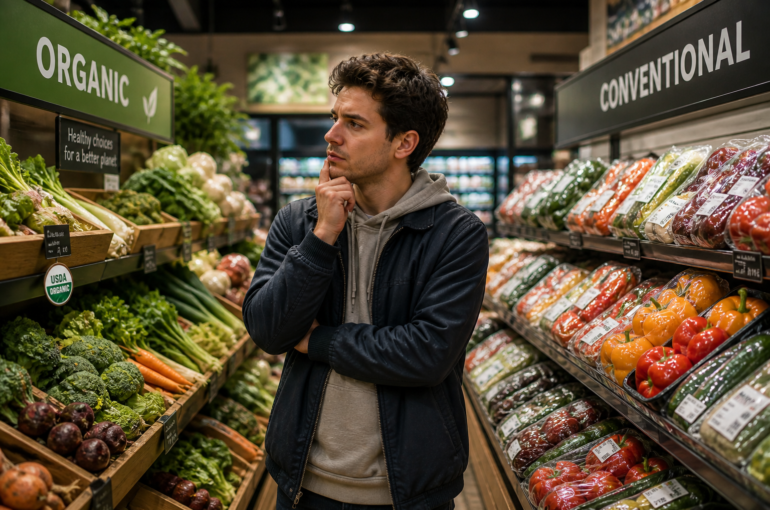
These days, it’s almost impossible to ignore the growing interest in organic food. With constant news about environmental issues, animal welfare, and health concerns, more people are starting to question what they eat—and where it comes from.
But one question keeps coming back: is organic food really worth it?
A Growing Concern About How Food Is Produced
Modern agriculture has changed dramatically over the past decades. In many cases, the focus has shifted toward efficiency and profitability, often at the expense of long-term sustainability.
Animals may be raised in confined conditions and given antibiotics to promote faster growth. Crops are frequently treated with chemical pesticides and fertilizers designed to maximize yields.
While these methods help produce large quantities of food, they also raise important concerns about environmental impact and food quality.
For many people, choosing organic food is a way to move toward a more natural and balanced system.
What Does “Organic” Really Mean?
In simple terms, organic food is produced using methods that avoid synthetic chemicals, genetic modification, and artificial processes.
However, the reality is more nuanced. Organic farming can still involve fertilizers and pesticides—but these are derived from natural sources rather than synthetic ones.
To ensure transparency, organic products must meet strict certification standards. In countries like the United States and Canada, official agencies regulate the use of the term “organic.”
Is Organic Food Actually Healthier?
This is where things become more complex.
Some studies suggest that organic foods may contain higher levels of certain nutrients, including antioxidants, vitamin C, and essential minerals. They also tend to contain fewer pesticide residues.
However, scientific consensus is still evolving, and more research is needed before drawing definitive conclusions.
Organic vs Local: An Important Perspective
One aspect that is often overlooked is transportation.
A product can be organic, but if it has traveled long distances, its environmental impact may be greater than that of locally sourced food.
For this reason, many experts recommend prioritizing both organic and local products whenever possible.
So, Is It Worth It?
The answer depends on your priorities.
If you value sustainability, reduced exposure to chemicals, and more ethical farming practices, organic food can be a worthwhile investment.
However, maintaining a healthy diet rich in fruits and vegetables remains the most important factor—whether organic or not
A More Balanced Way to Look at It
Organic food is not a perfect solution, but it represents a step toward more conscious consumption.
Even small changes—like choosing organic products when possible or buying from local farmers—can make a meaningful difference over time.
Related Posts
How to Eat Organic on a Budget: 9 Smart Tips That Actually Work
Eating organic food is often seen as expensive—but it doesn’t have to be. If you’re trying …

Organic Labels Explained: How to Recognize Genuine Organic Products
As organic food becomes increasingly popular, more companies are trying to appeal to environmentally conscious consumers. …
How to Find Organic Products Online Safely and Easily
Finding high-quality organic products is not always easy. Depending on where you live, access to organic …