
How to Keep Organic Fruits and Vegetables Fresh for Longer
How to Keep Organic Fruits and Vegetables Fresh for Longer
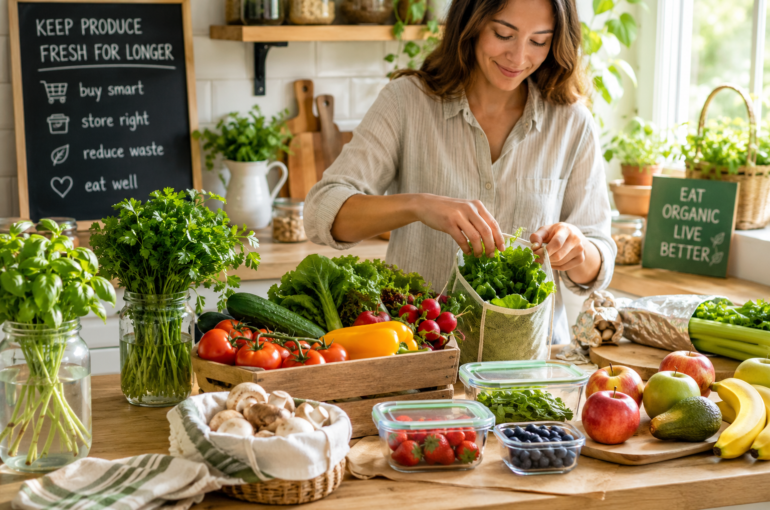
Fresh organic fruits and vegetables are a wonderful way to support a healthier and more natural lifestyle. However, because organic produce is often less processed and contains fewer artificial preservatives, proper storage becomes especially important.
Learning how to store fresh produce correctly can help reduce food waste, save money, and preserve flavor and nutrients for longer.
Why Proper Storage Matters
Many fruits and vegetables spoil quickly simply because they are stored incorrectly.
Temperature, humidity, airflow, and even the proximity of certain fruits can affect freshness. Some produce releases natural gases that accelerate ripening, while others are sensitive to moisture or cold temperatures.
Understanding a few basic storage principles can make a surprisingly big difference.
Tomatoes: Never in the Fridge
Tomatoes lose much of their flavor and texture when refrigerated.
For best results:
- Store tomatoes at room temperature
- Keep them out of direct sunlight
- Leave them on the vine when possible
Buying smaller quantities more often can also help reduce waste.
Bananas: Keep Them Together
Bananas ripen faster when separated from the bunch.
To help them last longer:
- Leave bananas attached together
- Store them at room temperature
- Avoid refrigeration until fully ripe
Buying bananas with a slight green tint often gives you a few extra days before they become overripe.
Berries: A Simple Vinegar Wash Trick
Strawberries, raspberries, and other berries spoil very quickly.
A simple method to help extend freshness is to rinse them using:
- 1 part white vinegar
- 3 parts water
After rinsing, dry them carefully before refrigerating.
This may help slow mold growth naturally.
Herbs: Treat Them Like Fresh Flowers
Fresh herbs stay vibrant longer when stored like flower bouquets.
Simply:
- Place herbs in a glass of water
- Keep them near natural light
- Trim only what you need each day
When herbs begin to wilt, they can still be preserved by chopping and freezing them in olive oil.
Mushrooms Need Airflow
Plastic traps moisture, which causes mushrooms to spoil faster.
Instead:
- Store mushrooms in a paper bag
- Keep them refrigerated
- Avoid sealed plastic containers
Avocados: Timing Is Everything
Avocados ripen best at room temperature.
Once ripe:
- Refrigerate them to slow the process
- Avoid stacking heavy items on top
- Use slightly soft avocados first
Apples and Ethylene Gas
Apples naturally release ethylene gas, which can accelerate ripening in nearby produce.
For best storage:
- Keep apples refrigerated
- Store them separately from sensitive fruits and vegetables
Interestingly, potatoes tolerate ethylene well and may even benefit from it.
Reduce Waste by Buying Smarter
One of the best ways to reduce food waste is simply to buy more intentionally.
Instead of purchasing large quantities at once:
- Buy smaller amounts more frequently
- Prioritize seasonal produce
- Use older produce first
- Freeze extra fruits and vegetables when possible
Shopping locally can also provide fresher produce that naturally lasts longer.
Final Thought
Keeping organic fruits and vegetables fresh does not require complicated techniques.
A few simple habits can help reduce waste, preserve flavor, and make healthy eating more affordable and sustainable over time.
Sometimes, the smartest way to support the planet begins right in your own kitchen.
Related Posts
How to Eat Organic on a Budget: 9 Smart Tips That Actually Work
Eating organic food is often seen as expensive—but it doesn’t have to be. If you’re trying …

Organic Labels Explained: How to Recognize Genuine Organic Products
As organic food becomes increasingly popular, more companies are trying to appeal to environmentally conscious consumers. …
How to Find Organic Products Online Safely and Easily
Finding high-quality organic products is not always easy. Depending on where you live, access to organic …