
Healthy Oils: Which Ones Deserve a Place in Your Kitchen?
Healthy Oils: Which Ones Deserve a Place in Your Kitchen?
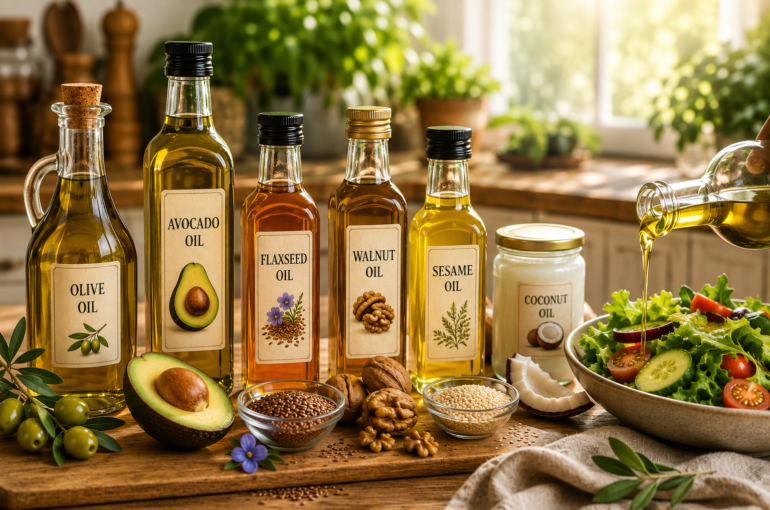
Healthy eating often focuses on vegetables, proteins, and whole foods, but oils also play an important role in many kitchens.
Different oils have different flavors, uses, and nutritional profiles.
Rather than avoiding fats completely, many people now focus on choosing oils that fit their cooking style and overall eating habits.
Why Oils Matter
Dietary fats play many roles in everyday nutrition.
Healthy oils can contribute flavor, texture, and versatility in meals.
Different oils may also contain nutrients and fatty acid profiles that vary considerably.
Because no single oil works perfectly for every situation, many kitchens use more than one option.
Popular Healthy Oils
Several oils are commonly used in healthy kitchens:
- Olive oil : Often appreciated for its mild flavor and naturally occurring monounsaturated fats. It is commonly associated with Mediterranean-style eating habits.
- Avocado oil : Popular for cooking because of its versatility and high heat tolerance. It also naturally contains healthy fats and vitamin E.
- Flaxseed oil : Often chosen because it naturally contains omega-3 fatty acids and is commonly used in cold preparations like smoothies and salad dressings.
- Walnut oil : Known for its rich flavor and nutritional profile. It is often used to add variety to salads and finishing dishes.
- Sesame oil : Frequently used to add flavor and aroma to meals, especially in Asian-inspired recipes
- Coconut oil : Popular in cooking and baking because of its distinctive taste and texture. Some people also appreciate its versatility in different recipes.
Each oil offers different characteristics.
Some work better for cooking at higher temperatures, while others are more commonly used in dressings or cold preparations.
Cooking vs Finishing Oils
Not all oils are used in the same way.
Some oils are often preferred for:
Cooking
- Avocado oil
- Olive oil
- Coconut oil
Others are often used as finishing oils:
- Flaxseed oil
- Walnut oil
- Sesame oil
Flavor and heat tolerance often influence these choices.
Balance Still Matters
Healthy eating rarely depends on a single ingredient.
Oils can be one part of balanced meals alongside vegetables, proteins, fruits, and whole foods.
Variety and moderation often remain important principles.
Final Thought
Healthy oils are less about finding one “perfect” option and more about understanding how different oils fit different needs.
Small choices in the kitchen can gradually become part of larger healthy habits.
Related Posts
Superfoods: Which Ones Are Worth Adding to Your Routine?
The term “superfood” appears everywhere today. From social media and health blogs to grocery stores and …
Tempeh: What It Is and Why People Are Discovering It
Tempeh may not be as widely known as tofu, but it has slowly gained popularity among …
Tofu for Beginners: Why It Became So Popular
Tofu has become one of the most recognizable ingredients in plant-based cooking, yet many people still …